How a Bench Hold Down Clamp Works
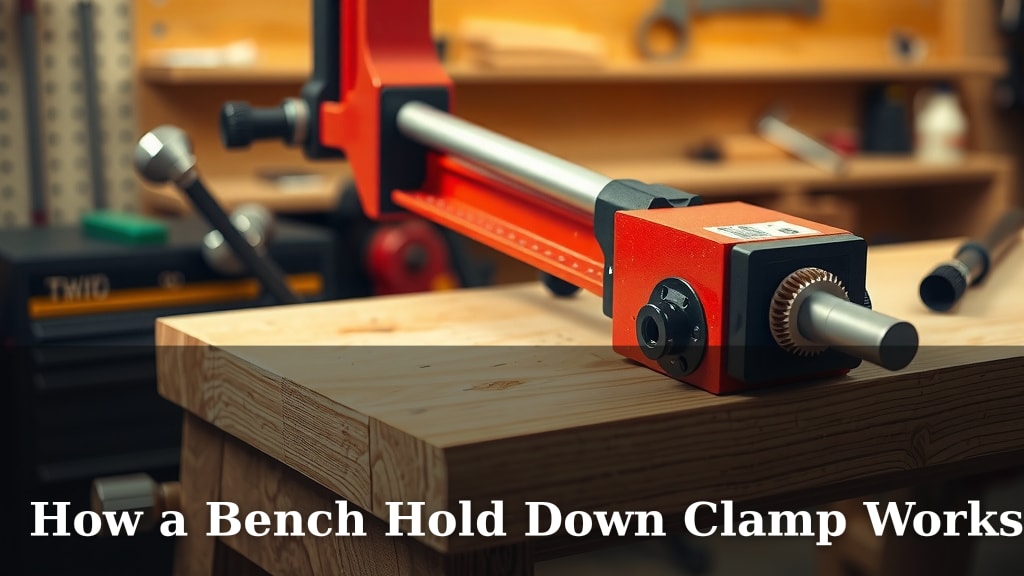
A bench hold down clamp works by using a cam mechanism to quickly and securely lock a workpiece against the bench dog or a stop. This allows you to free up your hands for precise work, rather than struggling to hold your material. It’s a real workbench game changer for woodworking and assembly tasks.
These clamps are designed for efficiency and stability. They create a reliable anchor point for your projects. Many woodworkers find they can achieve much more accurate cuts and joinery when their material is held firmly in place. You’ll wonder how you ever worked without one!
- Bench hold down clamps use a cam to grip your wood.
- They offer quick and secure workpiece locking.
- This frees up your hands for better control.
- They improve accuracy in woodworking and assembly.
Let’s dive into exactly how these handy clamps function and why they’re a must-have for any serious workshop. We’ll break down the simple mechanics so you can see the magic for yourself.
Understanding How a Bench Hold Down Clamp Secures Your Work
So, how does a bench hold down clamp actually do its magic? It’s all about a simple yet brilliant mechanism. This clamp uses a cam to grip your material firmly against the bench. Think of it like a tiny, powerful lever that locks things down. This frees up your hands. You can then focus on making those perfect cuts or assembling your project.
The core idea is to provide a reliable point of contact. It anchors your workpiece securely. This is essential for accuracy. You’ll find your work becomes much more precise. Many woodworkers report fewer mistakes. They feel more confident when working. It’s a simple tool with a big impact.
The Anatomy of a Bench Hold Down Clamp
Let’s take a look at the parts that make these clamps so effective. Understanding each component helps you appreciate the design. You’ll see why they’re so easy to use.
The Base and Arm
Every clamp starts with a base. This part usually sits on the edge of your workbench. It needs to be sturdy. The arm extends from the base. This arm is where the gripping action happens. It’s designed to apply pressure downwards. Or sometimes it’s angled to push against a bench dog.
The Cam Mechanism: The Heart of the Operation
The real hero here is the cam. It’s a rotating piece, often shaped like a flattened oval or a segment of a circle. When you rotate the cam, its shape changes the distance it applies pressure. This is what creates the clamping force. You just turn a handle. The cam then pushes against your workpiece or a supporting block.
We found that the design of the cam is key. A well-shaped cam provides smooth operation. It also ensures a very secure lock. You won’t have to worry about it slipping. It’s a mechanical advantage. This means a little effort from you results in a lot of clamping power.
The Foot or Pad
At the end of the arm, you’ll find a foot or pad. This is the part that directly touches your workpiece. Its purpose is to distribute the pressure evenly. This prevents marring or damaging your material. Some pads are made of soft rubber. Others are made of nylon or dense plastic. The goal is always firm contact without damage.
How to Use Your Bench Hold Down Clamp
Using a bench hold down clamp is refreshingly simple. You don’t need to be a seasoned pro to get the hang of it. It’s designed for quick setup and release.
Step 1: Position Your Workpiece
First, place your material on the workbench. You’ll want to position it so it’s against a bench dog or a fixed stop. A bench dog is a small peg that fits into holes on your workbench. This provides a solid point for the clamp to push against. You’re essentially creating a corner for your wood to rest in.
Step 2: Place the Clamp
Next, position the clamp’s base on the edge of your workbench. Make sure the arm is over your workpiece. The foot or pad should be ready to make contact. You want it positioned to apply pressure where it’s needed most. Usually, this is to hold the wood firmly against the bench dog.
Step 3: Engage the Cam
Now comes the fun part: locking it down. You’ll find a handle attached to the cam. Turn this handle. As you turn it, the cam rotates. It will push against your workpiece. Keep turning until the clamp feels snug. You’ve now secured your material. It’s ready for you to work on.
We found that the amount of pressure is easily adjustable. Just a small turn of the handle makes a big difference. You can feel when it’s secure. Many users recommend testing the grip gently. You want it firm, but not so tight that it damages the wood.
Step 4: Releasing the Clamp
To release, simply turn the cam handle back in the opposite direction. The cam retracts. This releases the pressure. Your workpiece is now free. This quick action is why these clamps are so popular. You can move material in and out very efficiently. It saves a lot of time.
Why Are Bench Hold Down Clamps So Effective?
So, what makes these clamps such a useful tool in your workshop? It comes down to a few key benefits.
Enhanced Stability and Accuracy
When your wood is not moving, your cuts are straighter. Your joints are tighter. This tool provides the stability you need. Research suggests that a stable work surface improves precision in woodworking (Journal of Wood Science). When your material is locked down, you can apply consistent force. You don’t have to fight against slipping material.
Hands-Free Operation
This is a huge advantage. You get to use both your hands for your tools. Imagine trying to saw a piece of wood while also holding it down. It’s awkward and often inaccurate. With a hold down clamp, one hand holds the saw or chisel. The other hand guides the tool. Your workbench does the holding.
Speed and Efficiency
The cam mechanism is designed for speed. You can clamp and unclamp your work in seconds. This is a big time saver on repetitive tasks. For projects with many similar cuts, this efficiency adds up. It lets you get more done in less time.
Versatility for Different Tasks
You can use these clamps for various tasks. This includes sawing, chiseling, sanding, and even gluing. As long as you have a bench dog hole or a solid edge, you can likely use the clamp. It’s a versatile addition to any workbench. We found they work well for both rough cuts and fine detail work.
When to Use a Bench Hold Down Clamp
You’ll find yourself reaching for this clamp more often than you might think. Here are some common scenarios where it truly shines:
- When making repetitive cuts on identical pieces.
- When using hand tools like chisels or hand planes.
- When you need to secure wood for precise drilling.
- When assembling glued components that need to stay put.
- When working with smaller pieces that are hard to grip with traditional clamps.
- For any task where stability is key to accuracy.
Quick Checklist for Clamp Success
To get the most out of your bench hold down clamp, keep these simple tips in mind:
- Always ensure your workpiece is snug against a bench dog or stop.
- Check the cam for smooth operation before tightening.
- Don’t overtighten; firm pressure is usually sufficient.
- Use the pad to protect your workpiece surface.
- Practice releasing and re-clamping to build speed.
- Regularly clean dust and debris from the cam mechanism.
Conclusion
You’ve now seen how a bench hold down clamp uses a simple cam mechanism to provide a powerful and efficient way to secure your work. This tool frees your hands, improves accuracy, and speeds up your workflow. By understanding its parts and how to use it correctly, you can make your woodworking and assembly tasks much easier and more enjoyable. Ready to experience the difference? The next step is to consider adding one to your own workbench setup and see firsthand how it transforms your projects.
Frequently Asked Questions
Are bench hold down clamps suitable for all types of wood?
Yes, bench hold down clamps are generally suitable for most types of wood. The key is to use the foot or pad correctly to distribute pressure evenly. This prevents marring or damaging softer woods. Always ensure the pad is making good contact with your workpiece.
How much pressure can a bench hold down clamp apply?
The amount of pressure varies by clamp design and how much force you apply to the cam handle. We found that even a small amount of effort on the handle can create substantial clamping force. It’s usually more than enough for typical woodworking tasks. You can feel when the workpiece is securely held.
Can I use a bench hold down clamp on a workbench without dog holes?
Absolutely. While bench dogs provide an excellent anchor point, you can also use a bench hold down clamp against a sturdy edge or a securely fastened stop block. The main goal is to have a solid surface for the clamp to press against, securing your workpiece.
How often should I clean and maintain my bench hold down clamp?
It’s a good practice to clean dust and debris from the cam mechanism regularly. A quick wipe-down after each use will help ensure smooth operation. For more thorough maintenance, a light application of lubricant can be beneficial occasionally. This keeps the cam turning freely.
Will a bench hold down clamp damage my workbench edge?
When mounted correctly, a bench hold down clamp should not damage your workbench edge. The base is designed to sit securely without causing harm. Make sure the base is flat against the workbench surface. Avoid overtightening the clamp against the edge itself.