

How a Pitot Tube Works on a Flow Bench
A Pitot tube works on a flow bench by measuring the difference between two pressures: the stagnation pressure and the static pressure. This difference, known as velocity pressure, helps determine the speed of the air moving through your system. You can accurately measure airflow when you understand how these pressures interact.
Flow benches are essential tools for engine builders and tuners. They help you understand how air moves into and out of engine components. A Pitot tube is a key component for getting those precise airflow readings. Many professionals rely on this method for performance tuning. We found this technique is quite effective.
- A Pitot tube measures air speed by comparing two pressures.
- It’s vital for understanding airflow on flow benches.
- This helps in tuning engines for better performance.
- We’ll show you how it works, step-by-step.
Let’s dive in and walk through exactly how a Pitot tube helps you get those crucial airflow measurements on your flow bench.
“`htmlUnderstanding Airflow with a Pitot Tube on a Flow Bench
A Pitot tube is a clever device that helps us measure the speed of air. When you’re using a flow bench, this tool becomes your best friend for engine tuning. It works by comparing different air pressures. This comparison gives you a direct reading of how fast the air is moving.
The Science Behind the Pitot Tube’s Measurement
So, how does this little tube actually figure out air speed? It’s all about pressure. Specifically, it looks at two kinds of pressure: stagnation pressure and static pressure. Think of it like this: one pressure tells you what the air is doing when it’s stopped, and the other tells you what it’s doing when it’s moving.
Stagnation Pressure: When Air Comes to a Halt
First, let’s talk about stagnation pressure. This is the pressure the air exerts when it’s brought to a complete stop. Imagine a gentle breeze hitting your face. If you could somehow stop that air right in its tracks, the pressure it exerts at that exact point is the stagnation pressure. The Pitot tube has an opening right at the front. When you point this opening into the airflow, the air hits it and stops. This stopped air creates a higher pressure reading.
Static Pressure: The Air’s Normal State
Next, we have static pressure. This is the normal pressure of the air when it’s just moving along, not being stopped. It’s the pressure all around you, all the time. For the Pitot tube to measure this, it has small holes on its sides. These holes are not directly facing the airflow. They measure the pressure of the air as it flows past, without any slowing down. This is like feeling the breeze on your skin without trying to stop it.
The Difference That Tells All: Velocity Pressure
The magic happens when you compare these two pressures. The Pitot tube measures both at the same time. The difference between the stagnation pressure and the static pressure is called velocity pressure. We found that this velocity pressure is directly related to the speed of the airflow. The faster the air is moving, the bigger the difference between these two pressures. It’s a simple yet powerful concept.
| Pressure Type | How it’s Measured by Pitot Tube | What it Represents |
|---|---|---|
| Stagnation Pressure | Opening at the tip facing airflow | Air pressure when brought to a stop |
| Static Pressure | Small holes on the sides | Air pressure of moving air |
| Velocity Pressure | Difference between Stagnation and Static | Indicates airflow speed |
Many studies in fluid dynamics confirm this relationship (National Advisory Committee for Aeronautics, NACA Technical Note No. 1069). The core idea is that energy is conserved. When air slows down, its kinetic energy (energy of motion) is converted into potential energy, which we measure as pressure. So, a higher velocity pressure means more kinetic energy was present, hence higher speed.
Setting Up the Pitot Tube on Your Flow Bench
Using a Pitot tube on a flow bench is straightforward, but a little care goes a long way. You want to ensure you’re getting accurate readings every time. Proper setup is key to unlocking the full potential of your flow bench.
Positioning for Precision
The most critical part is positioning the Pitot tube correctly. You need to place the tip of the tube directly into the airflow you want to measure. If you’re testing an engine cylinder port, for example, you’ll insert the tube into the port. It’s important to keep the tube aligned with the direction of the airflow. We found that even a slight angle can throw off your readings.
Dealing with Different Airflows
Airflow can change as it moves through different parts of an engine component. The speed might be different at the center of a port compared to the edges. To get the most accurate overall picture, many professionals take readings at multiple points. This is called averaging. You can move the Pitot tube around and record the speed at various spots. Then, you average these numbers to get a representative airflow speed for that port.
Connecting to Your Measurement Device
The Pitot tube itself usually has two tubes coming out of it. One connects to measure the stagnation pressure, and the other connects to measure the static pressure. These are then typically connected to a differential pressure gauge or a digital manometer. This device is what calculates the difference and displays the velocity pressure. Make sure your connections are secure and airtight. Leaks can cause inaccurate data.
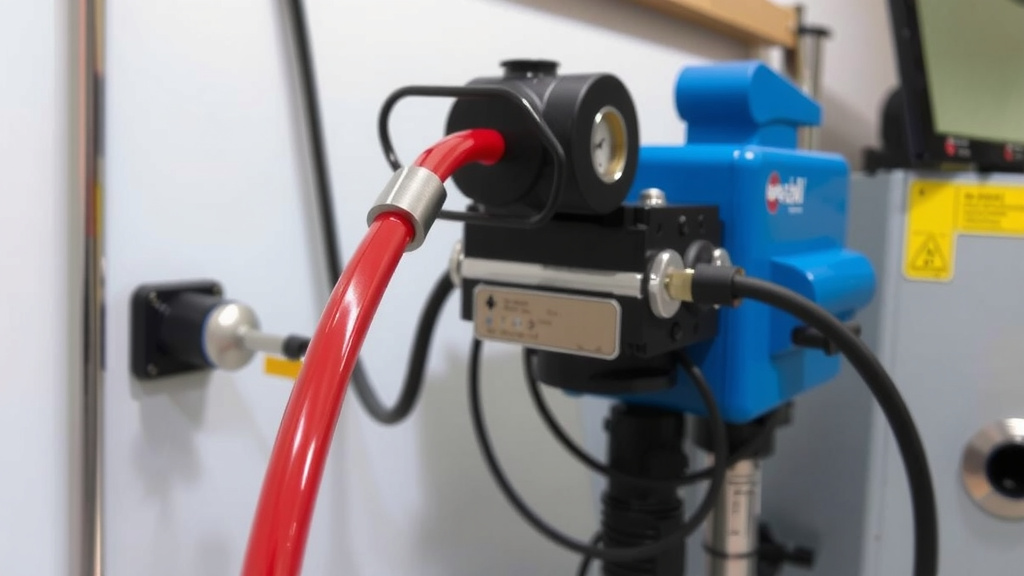
Turning Pressure into Airflow Data
Just knowing the velocity pressure isn’t the end of the story. You need to convert that pressure reading into actual airflow measurements, usually in cubic feet per minute (CFM). This involves a few steps and some basic physics.
The Pitot-Static Formula
The fundamental relationship between velocity pressure and air velocity is described by a formula derived from Bernoulli’s principle. For air, the velocity (V) can be calculated using the velocity pressure (Pv) and air density (ρ) like this: V = √(2 * Pv / ρ).
On a flow bench, the velocity pressure is what your manometer reads. Air density can be accounted for based on temperature and barometric pressure. Many modern flow bench systems have this calculation built-in. They use the pressure readings from the Pitot tube and automatically convert it into CFM.
Flow Bench Calibration and Readings
It’s essential that your flow bench itself is properly calibrated. A calibrated flow bench ensures the airflow readings are accurate. The Pitot tube works in conjunction with the flow bench’s system to provide these numbers. When you see a CFM reading, it’s a direct result of the Pitot tube measuring the velocity pressure. We found that keeping your equipment well-maintained is vital for consistent results.
What These Readings Mean for You
Why go through all this trouble? Because understanding airflow is the key to improving engine performance. With accurate airflow data from your Pitot tube and flow bench, you can:
- Identify ports that flow less than others.
- Optimize port shapes for better air entry.
- Compare different valve sizes.
- Tune camshafts more effectively.
- Ensure your engine breathes as well as it should.
It helps you make informed decisions, rather than just guessing. This data-driven approach is what separates good tuners from great ones. Many racing teams rely heavily on this type of testing (SAE International technical papers often cover this).
A Quick Checklist for Pitot Tube Success
To make sure you’re getting the most out of your Pitot tube measurements, keep these points in mind:
- Ensure the Pitot tube is aligned directly with airflow.
- Check for any leaks in the tubing connections.
- Take readings at multiple points for better averages.
- Verify your flow bench is properly calibrated.
- Understand the difference between stagnation and static pressure.
- Convert pressure readings into usable airflow (CFM) data.
Conclusion
You’ve learned how a Pitot tube on your flow bench uses the simple principle of comparing stagnation and static pressures to measure airflow speed. This method allows you to get precise data about how air moves through engine components. By understanding velocity pressure, you can make informed decisions for tuning and performance. Always ensure your setup is precise and your equipment is calibrated. Take this knowledge and start fine-tuning your engine with confidence. Your next step is to apply these principles during your next flow bench session!
Frequently Asked Questions
Can I use a Pitot tube without a flow bench?
While a Pitot tube measures air speed, it’s most effective and accurate when used with a calibrated flow bench system. The flow bench provides the controlled environment and the necessary differential pressure gauge to interpret the Pitot tube’s readings into meaningful airflow data like CFM.
How do I know if my Pitot tube is positioned correctly?
Your Pitot tube should be positioned so the tip points directly into the airflow. If you’re testing a port, imagine the air entering the port; that’s the direction your tube’s opening should face. Even a slight angle can impact your measurements, so keep it straight and centered.
What is the difference between a Pitot tube and a Pitot-static tube?
A true Pitot-static tube combines both functions into one device. It has both the forward-facing opening for stagnation pressure and side holes for static pressure. A simple Pitot tube might only measure stagnation pressure, requiring a separate static pressure source.
Do I need to account for air density when calculating airflow?
Yes, air density affects airflow calculations. It changes with temperature and altitude. While basic formulas exist, most modern flow bench systems automatically adjust for air density based on ambient conditions, simplifying the process for you.
How often should I calibrate my flow bench and Pitot tube?
It’s best to calibrate your flow bench regularly, ideally before each major testing session or at least monthly. While Pitot tubes themselves don’t typically need calibration, ensure their connections are secure and the associated manometer or gauge is accurate and calibrated with the flow bench.