How Tall Should Workbench Legs Be?
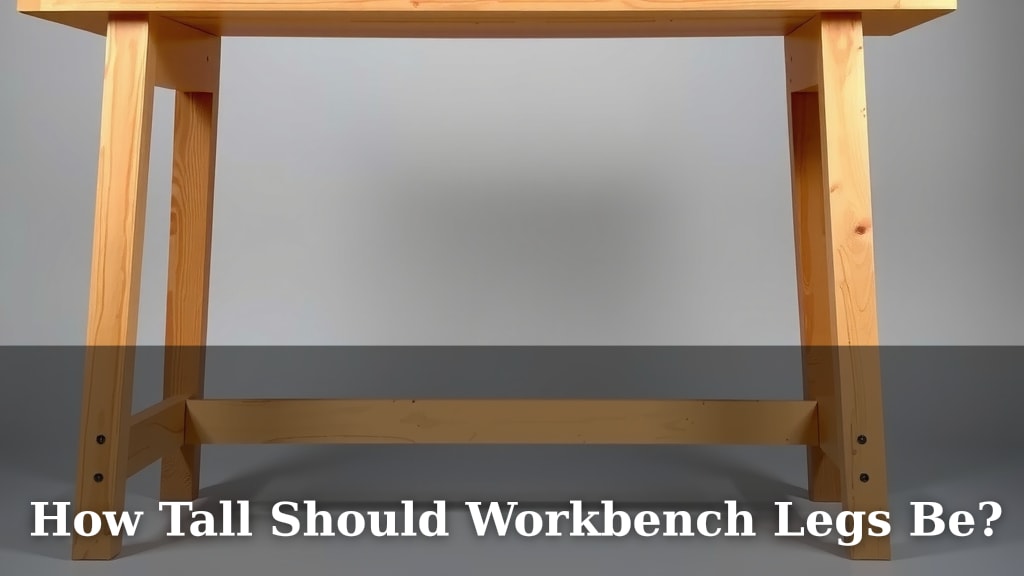
The ideal workbench leg height is typically between 34 and 36 inches, putting the surface at about your hip bone. This standard height works well for most tasks, letting you stand comfortably or sit on a stool. Getting the height right means you can work efficiently without straining your back or arms.
Choosing the wrong leg height can make your workshop feel awkward. You might find yourself hunching over for detailed work or reaching too high for simple tasks. We found that the best workbench height is the one that fits your body and the projects you do most often. Think about your average posture and the tools you use.
- Standard workbench leg height: 34-36 inches.
- Aim for the surface to reach your hip bone.
- This allows comfortable standing or stool use.
- Adjust based on your height and typical tasks.
- Proper height prevents back strain and improves efficiency.
Below, we’ll dive into how to figure out the perfect height for your specific workbench needs.
You’ve got your lumber, your tools, and a vision for that perfect workbench. Now, let’s talk about something that can make or break your DIY experience: the height of those legs. Getting this right isn’t just about aesthetics; it’s about your comfort, your health, and how much you actually enjoy using your workspace.
Finding Your Workbench’s Ideal Height
Determining the right height for your workbench legs is largely about matching it to your own body and how you work. We found that aiming for the surface to land around your hip bone is a solid starting point.
For many people, this translates to a workbench leg height of about 34 to 36 inches. This range allows for comfortable standing or the use of a stool for longer sessions. It’s a standard because it works for a wide variety of people and tasks. Think of it as the Goldilocks zone: not too high, not too low.
Why Standard Height Works for Most
The standard 34-36 inch height is often recommended for good reason. It generally supports a neutral posture when standing. This means your shoulders can relax, and your arms can move freely without undue strain. We found that many DIYers report fewer aches and pains when their workbench is at this height.
When you’re standing at a workbench that’s too low, you tend to hunch. This puts a lot of pressure on your lower back. On the flip side, a workbench that’s too high forces you to raise your shoulders. This can lead to neck and shoulder stiffness. Having your workbench legs at the right height helps you avoid these common workshop woes.
How to Measure for Your Perfect Height
So, how do you pinpoint that sweet spot for your workbench legs? It’s a simple process that involves a little bit of measuring and a little bit of standing. You don’t need fancy equipment, just yourself and a tape measure.
The Standing Test
First, stand up straight in your typical working posture. You know, the one you adopt when you’re really focused on a project. Relax your shoulders and let your arms hang naturally at your sides. Now, bend your elbows so your forearms are roughly parallel to the floor, as if you were about to start sanding or using a hand tool.
Have someone measure the distance from the floor to the bottom of your elbow. This measurement is a strong indicator of your ideal workbench height. Many experts suggest subtracting about 3-6 inches from your elbow height for a comfortable working surface.
Considering Your Stool or Chair
Are you someone who prefers to sit while you work? Or maybe you use a stool for certain tasks. If so, your ideal workbench height might be a little different. When sitting on your preferred stool or chair, your goal is to have your forearms parallel to the workbench surface.
Research suggests that for seated work, the workbench surface should be about 6-10 inches above the seat of your stool or chair. This allows for proper ergonomics while seated. You want to be able to rest your forearms comfortably without raising your shoulders.
Adjusting for Specific Tasks
While the standard height is a great starting point, some tasks might benefit from a slightly different workbench height. Think about the types of projects you tackle most often.
Heavy-Duty Work
For tasks requiring a lot of force, like hammering or using heavy power tools, you might find a slightly lower workbench more advantageous. A bit more leverage can come from a lower surface. This allows you to put your body weight into the work more effectively.
Some sources suggest dropping the workbench height by an inch or two for these kinds of demanding tasks. It’s all about optimizing your physical input without straining yourself. You want to feel stable and supported.
Fine Detail and Assembly
On the other hand, if your projects involve a lot of intricate detail work, like assembling tiny components or detailed carving, a slightly higher workbench might be better. This can reduce the need to lean over excessively. It helps maintain a clearer view of your work.
Consider raising the workbench by an inch or two if detailed work is your main focus. This can help prevent neck strain and improve your focus by bringing the project closer to eye level. It’s about minimizing fatigue so you can concentrate on the delicate steps.
Practical Adjustments for Your Workbench Legs
Once you have a target height in mind, you might need to adjust your workbench legs. Fortunately, there are several straightforward ways to achieve this.
Adjustable Workbench Legs
If you’re building a new workbench, consider purchasing adjustable legs. These often come with a telescoping design, allowing you to fine-tune the height easily. Many are designed to support significant weight. They offer flexibility if your needs change over time.
We found that adjustable legs are a fantastic investment if you anticipate varying your workbench height for different projects or users. They can make significant adjustments in just a few minutes. This is a real time-saver.
Adding Height with Blocks or Risers
For a more budget-friendly approach, you can add height by using wood blocks or specialized workbench leg risers. These are placed between the existing legs and the floor. Ensure they are sturdy and securely fastened.
Using thicker wood pieces as risers can be a very stable solution. Just be sure the added pieces are strong enough to support the weight. You don’t want any wobbling when you’re in the middle of a task.
Cutting Legs Shorter
If your workbench legs are too tall, the simplest solution is often to cut them down. Use a reliable saw and measure carefully. Take a little off at a time and re-measure to ensure you don’t cut too much.
You can always cut more, but you can’t add it back! So, measure twice and cut once. This is a permanent adjustment, so be sure of your measurements before you make the cut.
Choosing the Right Height for Everyone
If multiple people will be using the workbench, consider average user height. Adjustable legs are ideal here. Otherwise, set the workbench to a height that accommodates the majority comfortably, or the primary user.
Remember, the goal is ergonomic comfort. You should be able to work without developing aches and pains. A workbench that fits you will make your projects more enjoyable and productive.
Quick Checklist for Workbench Height:
- Stand tall and relax your shoulders.
- Bend elbows to a 90-degree angle.
- Measure from floor to just below your elbow.
- Subtract 3-6 inches for standing height.
- Consider stool height for seated work.
- Adjust for heavy or fine detail tasks.
Conclusion
Finding the right workbench leg height is key to a comfortable and productive workspace. You’ve learned that a standard 34-36 inch height works for most, aiming for your hip bone. Remember to test your ideal height by measuring your elbow height when standing. If you prefer sitting, adjust for your stool. Don’t forget to tweak it for heavy-duty or fine detail work. Now, take these tips and build or adjust your workbench for years of pain-free projects!
Frequently Asked Questions
What is the most common workbench leg height?
The most common workbench leg height is between 34 and 36 inches. This range is considered standard because it works well for the average person, allowing comfortable standing or the use of a stool. Many DIYers find this height supports good posture.
Can I make my workbench legs shorter if they are too tall?
Yes, you can absolutely cut your workbench legs shorter if they are too tall. Measure carefully and use a reliable saw. It’s always better to remove a small amount at a time, re-measure, and then cut more if needed. Remember, you can always cut more, but you can’t add it back!
What if I use a stool or chair at my workbench?
If you plan to sit while working, your ideal workbench height will be different. When seated, your forearms should be roughly parallel to the workbench surface. Research suggests the workbench should be about 6-10 inches higher than your stool or chair seat.
How do I measure my ideal workbench height?
Stand naturally and relax your shoulders. Bend your elbows to about a 90-degree angle. Have someone measure the distance from the floor to your bent elbow. Subtracting 3-6 inches from this measurement often gives you a comfortable standing workbench height.
Are adjustable workbench legs worth the investment?
Adjustable workbench legs can be a worthwhile investment, especially if you anticipate changing your needs or if multiple people will use the workbench. They allow you to easily fine-tune the height without permanent modifications. This offers great flexibility for different tasks and users.