How High Should a Workbench Be?
The ideal workbench height is generally around your waist level. This allows you to work comfortably with good posture. For most adults, this falls between 30 to 36 inches. Finding the right height helps prevent back strain and improves your accuracy.
Getting the workbench height just right is more important than you might think. It’s not just about comfort; it’s about ergonomics and safety. A workbench that’s too high or too low can lead to muscle fatigue and potential injuries.
- The best workbench height is typically at your waist.
- Aim for 30 to 36 inches for most adults.
- Adjust height based on your specific tasks.
- Consider specialized benches for standing or sitting.
Let’s dive into how to figure out the perfect height for your workbench and why it matters so much for your projects.
You’ve got your workspace mapped out, your tools are ready, but there’s one nagging question: how high should that workbench actually be? It might seem like a small detail, but trust us, it’s a big deal for your comfort and the quality of your work.
Finding Your Perfect Workbench Height
The best workbench height is usually around your natural waistline. This general rule aims for ergonomic efficiency. It allows you to stand comfortably without hunching or reaching too high.
The Waist-Level Rule of Thumb
Most people find a workbench height between 30 and 36 inches to be just right. This range works well for average adult heights. Imagine your hands resting on the surface; your elbows should be bent at about a 90-degree angle. This posture is key for preventing strain.
Think about it: if your bench is too low, you’ll find yourself bending over constantly. This puts a lot of pressure on your lower back. If it’s too high, your shoulders will creep up, leading to neck and shoulder pain. Neither is a fun recipe for tackling your projects!
Why Does Height Matter So Much?
It all comes down to ergonomics, which is basically the science of making things work for people. When your workbench is at the right height, your body is in a neutral, balanced position. This means less fatigue and more control over your tools and materials.
Research from occupational health experts consistently points to proper workstation height as a major factor in reducing musculoskeletal disorders (National Institute for Occupational Safety and Health – NIOSH). So, getting this right isn’t just about comfort; it’s about long-term health and safety in your workshop.
Posture Check: The Ideal Bend
When you stand at your workbench, try this simple test. Let your arms hang naturally at your sides. Now, bend your elbows to about 90 degrees. The distance from the floor to where your hands are now is a good starting point for your workbench height. This allows your wrists to remain straight while working, which is essential for preventing conditions like carpal tunnel syndrome (Cleveland Clinic).
Adjusting for Different Tasks and People
While the waist-level rule is a great starting point, it’s not one-size-fits-all. Different tasks and different people require different adjustments. Think of your workbench as a customizable tool, just like your other equipment.
Task-Specific Considerations
What exactly will you be doing at your workbench? This is a crucial question. For tasks requiring fine detail and precision, like intricate model building or jewelry making, you might prefer a slightly lower bench. This allows for a more relaxed arm position and better control.
On the other hand, if you’re doing heavy-duty work like woodworking or metal fabrication, a slightly higher bench might be beneficial. This can provide more leverage and stability for forceful actions. Many experienced woodworkers actually prefer a bench height that allows them to stand straighter, reducing bending.
Accommodating Different Heights
Are you on the taller side? Or perhaps you share your workshop with someone who has a different stature? If so, a fixed-height bench might not be ideal. A workbench that can be adjusted is a fantastic solution. Many modern workbenches come with adjustable legs, allowing you to dial in the perfect height for whoever is using it.
Even for a single user, having the ability to adjust the height can be useful. You might find that for certain tasks, a slightly different height feels better. Being able to make those small tweaks can make a big difference in your overall comfort and efficiency.
The Sitting vs. Standing Debate
Consider whether you’ll primarily be sitting or standing at your workbench. A workbench designed for sitting should be lower than one for standing. For sitting work, aim for a height that allows your feet to rest flat on the floor, with your knees at about a 90-degree angle. Your elbows should still be around that 90-degree bend when your hands are on the surface.
If you plan to alternate between sitting and standing, a height-adjustable workbench is your best friend. This offers the most flexibility. You can easily change the height to suit your posture and the task at hand, ensuring comfort throughout your work session.
Practical Ways to Achieve the Right Height
So, you know the ideal range, but how do you actually get your workbench to that perfect height? Don’t worry, you have options. Some solutions are quick and easy, while others involve a bit more planning.
Adjustable Workbenches and Kits
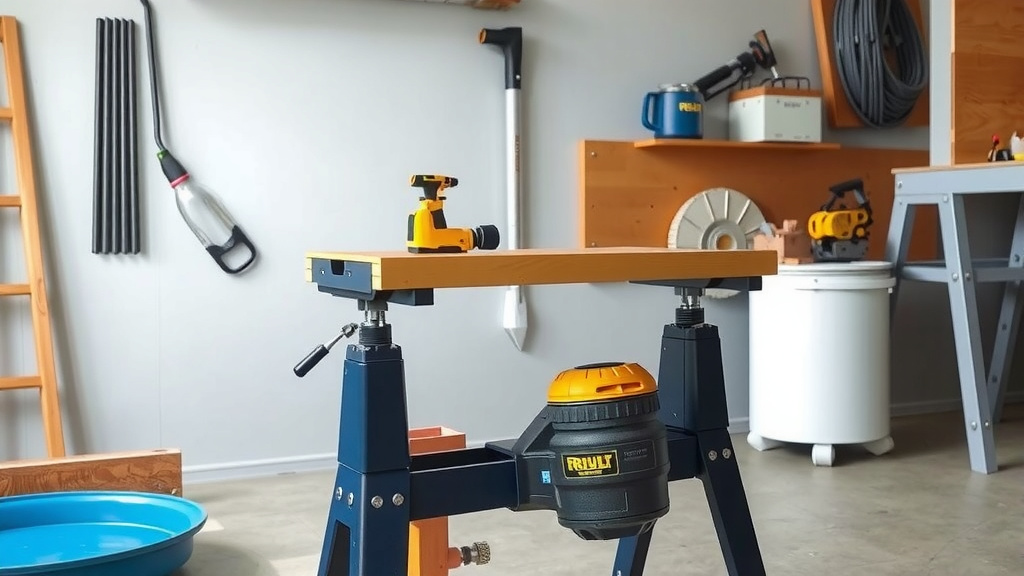
The easiest route is often an adjustable workbench. Many feature crank mechanisms or bolt-through legs that allow for precise height customization. You can also find adjustable leg kits that can be added to an existing workbench frame. This is a great option if you’ve already built or acquired a sturdy base.
DIY Solutions: Building Your Own
If you’re a DIY enthusiast, building your own workbench offers the ultimate control over height. You can design it specifically for your needs. When planning your build, remember to factor in the thickness of your workbench top. If you’re using a thick butcher block, for instance, you’ll need to account for that when calculating leg length.
Many online resources and plans show you how to build sturdy workbenches. You can easily modify these plans to achieve your desired height. Just make sure the design is robust enough for the work you plan to do.
Adding Risers or Modifying Legs
Perhaps your workbench is a bit too low. You can often solve this by adding sturdy risers to the legs. These could be thick blocks of wood or metal plates, securely attached to the base of the legs. Make sure whatever you use is stable and won’t wobble.
Conversely, if your bench is too high, you might need to trim the legs. This requires careful measurement and precision cutting to ensure the bench remains level and stable. If you’re unsure about cutting, it might be worth seeking help from someone with woodworking experience.
Your Workbench Height Checklist
To recap, here’s a quick checklist to help you find and set your ideal workbench height:
- Measure your natural elbow bend height when arms hang relaxed.
- Aim for a height that allows about a 90-degree elbow bend while working.
- Consider the primary tasks you’ll perform at the bench.
- Factor in whether you’ll be sitting or standing.
- If possible, opt for an adjustable workbench or legs.
- Test your chosen height for comfort and posture before committing.
Conclusion
Finding the right workbench height is a foundational step for any workshop. You’ve learned that the sweet spot is usually around your natural waist, promoting good posture and preventing strain. Remember, a workbench isn’t just a surface; it’s a partner in your projects. Adjusting for specific tasks or accommodating different users ensures you’re always working efficiently and safely. Don’t be afraid to tweak and test until it feels just right for you. Now, go measure your space and make that workbench work for your body!
Frequently Asked Questions
What if my workbench is too low?
If your workbench feels too low, you can often add stable risers to the legs. Thick blocks of wood or metal plates, securely attached, can give you the extra height needed. Ensure the additions are strong and don’t create wobbling.
Can I use a sitting height for standing tasks?
It’s generally not recommended. A workbench set for sitting will be too low for comfortable standing work, forcing you to hunch and strain your back. You’ll need to adjust the height or use a different bench for standing tasks.
How do I know if my workbench is too high?
If you find yourself constantly shrugging your shoulders or feeling tension in your neck and upper back, your workbench is likely too high. Your elbows should maintain a relaxed, roughly 90-degree bend when your hands are on the surface.
Do professional woodworkers use a specific height?
Many professional woodworkers prefer a bench height that allows them to stand straighter, reducing the need to bend over. This often means a slightly higher bench than the standard waist-level rule, but it’s tailored to their working style and physique.
Is an adjustable workbench worth the extra cost?
If you share your workspace, have changing needs, or want maximum flexibility, an adjustable workbench can be a great investment. It allows you to easily dial in the perfect height for different tasks and users, promoting better ergonomics and comfort.