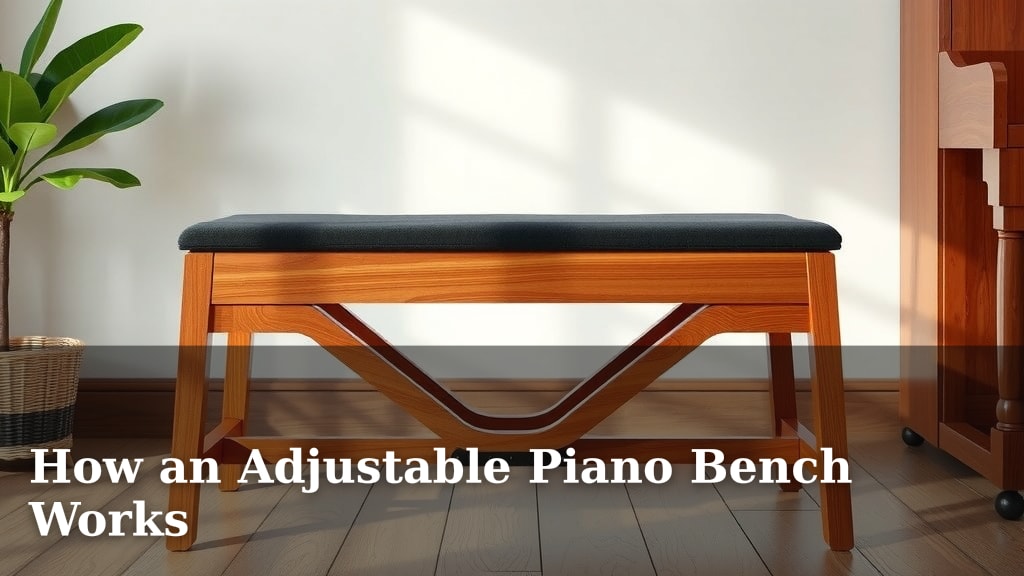
How an Adjustable Piano Bench Works
An adjustable piano bench works by using a simple mechanical system of gears and levers. You turn a knob or handle, and this action raises or lowers the seat. This lets you find the perfect height for comfortable playing. It’s designed to be sturdy and easy to adjust.
These benches are a game-changer for pianists of all sizes. They ensure you have the proper posture, which is key to avoiding strain. Proper height also helps you play with more control and accuracy. Many pianos don’t come with adjustable benches, so this is an important upgrade.
- Adjustable benches use gears and levers.
- Turning a knob or handle changes the height.
- They help you find the perfect playing position.
- Proper height aids posture and prevents strain.
- It’s a great upgrade for any pianist.
Below, we’ll show you exactly how the height adjustment on your piano bench functions and why it matters so much for your playing.
How Adjustable Piano Benches Raise and Lower
You might be wondering about the magic behind that adjustable piano bench. How does it actually work? The secret lies in a clever arrangement of gears and levers. These mechanical parts work together to lift and lower the seat smoothly. It’s a simple, reliable system.
The Core Mechanism: Gears and Levers
At its heart, your adjustable bench uses a mechanism similar to a screw jack. You turn a crank or knob. This rotation is transferred to gears. These gears then engage with a threaded rod or a similar component. As the rod turns, it moves up or down.
Think of it like turning a screw. When you turn the screw one way, it moves deeper into the material. Turn it the other way, and it comes out. The bench mechanism does this, but it moves the entire seat up or down.
Understanding the Crank or Knob
The part you interact with is usually a crank handle or a large knob. This is connected to the internal gear system. When you rotate it, you’re providing the manual force needed to drive the mechanism. It’s designed to be easy to turn, even with the weight of a person on the bench.
The Role of the Gears
Gears are essential for reducing effort. They allow you to lift or lower the bench seat with relatively little force. Without gears, you’d need much more strength. The specific gear ratios are chosen to balance ease of use with stability.
The Lifting Mechanism Itself
Beneath the seat, you’ll find the lifting column. This is often a sturdy metal structure. It contains the threaded rod or screw mechanism. As the gears turn this rod, the column extends or retracts, changing the bench’s height. Some benches might use scissor-like levers, but the gear-driven screw is more common for height adjustment.
Why Finding the Right Height Matters
Getting the bench height just right isn’t just about comfort; it’s about playing better and healthier. Your posture while playing the piano is incredibly important. Experts consistently point to good posture as a key factor in performance and injury prevention (American Physical Therapy Association).
Posture and Your Body
When your bench is too low, you might hunch forward. This strains your back and shoulders. If it’s too high, your arms can feel heavy. Your shoulders might rise uncomfortably. The ideal height lets your forearms be nearly parallel to the floor. Your elbows should be slightly below the keyboard level. This allows for relaxed arm movement.
Impact on Playing Technique
Proper bench height directly affects your control and fluidity. When you’re at the right height, your wrists are more relaxed. This makes it easier to execute fast passages. You can also use your arm weight more effectively. This adds depth and richness to your tone.
Preventing Strain and Injury
Playing the piano for extended periods can lead to repetitive strain injuries. Poor posture is a major contributor. Research indicates that maintaining a neutral body alignment can significantly reduce the risk of discomfort and pain (Harvard Health Publishing). An adjustable bench is a tool to help you achieve that alignment.

Choosing and Using Your Adjustable Bench
Not all adjustable benches are created equal. When looking for one, consider a few things. You want a mechanism that feels smooth and stable. Avoid benches that feel wobbly or difficult to adjust.
What to Look For in a Bench
A good adjustable bench will have a wide height range. This is important for accommodating different players and situations. Look for a bench that feels solid and well-constructed. The padding should be comfortable for longer practice sessions.
| Feature | Benefit |
|---|---|
| Gear and Lever Mechanism | Smooth, easy height adjustment. |
| Wide Height Range | Accommodates various players and pianos. |
| Sturdy Construction | Provides stability and safety. |
| Padded Seat | Ensures comfort during practice. |
| Non-slip Feet | Keeps the bench securely in place. |
Your Checklist for Perfect Bench Setup
Once you have your bench, setting it up is simple. Follow these steps to find your ideal playing position:
- Sit on the bench with your feet flat on the floor.
- Adjust the bench height so your forearms are level with the keys.
- Your elbows should be relaxed and slightly lower than the keyboard.
- Ensure your wrists are not bent up or down excessively.
- Check that your back is straight and shoulders are relaxed.
- Make fine adjustments until you feel completely comfortable and balanced.
Taking a moment to get this right can make a world of difference in your playing experience. It’s a small adjustment that yields big results.
Conclusion
You’ve learned how your adjustable piano bench uses a clever gear and lever system to help you find the perfect playing height. This simple mechanism makes a big difference in your playing posture and comfort. Getting your bench height right supports healthy playing habits and better control at the keyboard. Now that you understand its function, take a moment to set yours up for optimal comfort and technique. Your back and your music will thank you.
Frequently Asked Questions
How often do I need to lubricate my adjustable piano bench mechanism?
Most modern adjustable piano benches are designed for minimal maintenance. Lubrication is rarely needed for the gear and lever system. You can check your bench’s manual for specific recommendations, but usually, a dry mechanism works best to avoid dust buildup.
What’s the difference between a manual and an electric adjustable piano bench?
Manual benches, like the ones discussed, require you to turn a knob or crank to adjust the height. Electric benches use a small motor and button controls for adjustment. While electric benches offer ultimate convenience, manual ones are reliable and require no power source.
Can my adjustable piano bench help with back pain?
Yes, an adjustable bench can significantly help reduce back pain associated with playing. By allowing you to achieve a neutral posture with forearms parallel to the floor, it prevents slouching and strain on your spine. Proper ergonomic setup is key to pain-free playing.
Is it normal for my adjustable bench to make a slight noise when adjusting?
A soft clicking or whirring sound is often normal as the gears engage and move the mechanism. However, if you hear grinding, scraping, or loud clunking noises, there might be an issue with the internal parts. This could indicate debris or a problem needing attention.
How do I know if my adjustable bench is at the correct height for me?
The ideal height allows your forearms to be nearly parallel to the floor when your hands are on the keys. Your elbows should be relaxed and slightly below keyboard level, and your wrists should be relatively straight, not bent up or down. Sit comfortably with your feet flat on the floor to assess.