How Many Types of Punches Are Used in Bench Work?
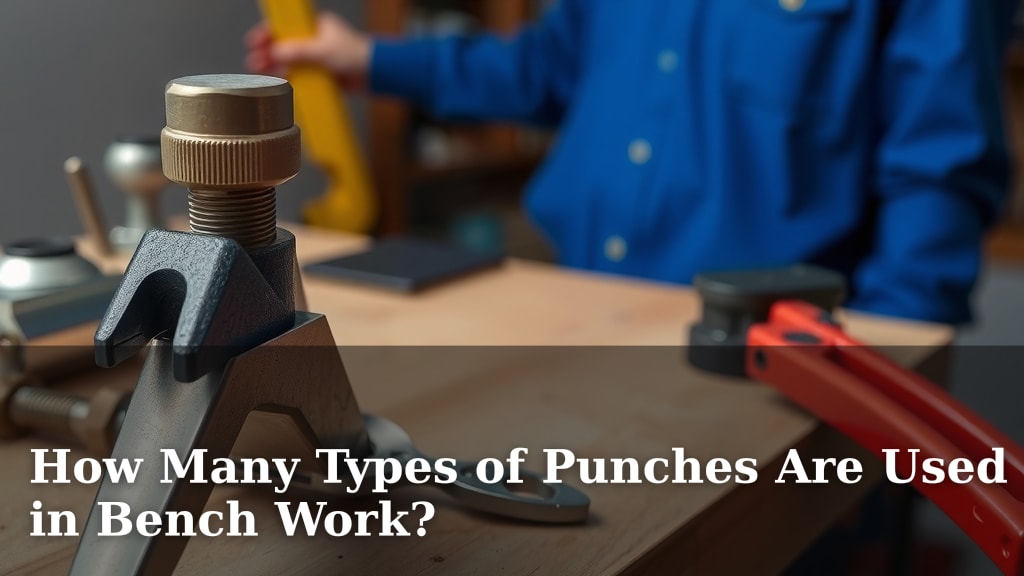
Bench work uses several types of punches for various tasks. You’ll commonly find center punches, prick punches, and drift punches in most workshops. Each type is designed for a specific job, helping you work more precisely and efficiently.
Understanding these tools can make your metalworking or woodworking projects much smoother. A well-placed mark can prevent mistakes and ensure accuracy. We’ve found that knowing your punches is key to good bench practice. Think of them as your helping hands for precision tasks.
- Center punches make starting holes easy.
- Prick punches mark precise locations.
- Drift punches help align parts.
- Different jobs need different punch types.
Let’s walk through exactly what each punch does and when you should reach for it.
You’ve seen them in toolboxes and workshops everywhere. These pointed metal rods are essential for precise work on your bench. But just how many different kinds of punches are there for bench work? We found there are several main types, each with its own special job. Understanding these tools can really make your projects smoother and more accurate. Let’s take a closer look at the most common ones you’ll encounter.
Understanding the Various Punch Types for Bench Work
When you’re working at your bench, having the right punch can save you a lot of headaches. It ensures your marks are clear and exactly where you need them. We found that most bench work tasks involve a few key punch designs.
1. The Mighty Center Punch
This is probably the most common punch you’ll see. Its main job is to create a small indentation. This indentation acts as a guide for drilling. You can think of it as setting a tiny target for your drill bit. This prevents the bit from wandering when you start drilling. It’s a real time-saver and accuracy booster.
When to Use a Center Punch
You’ll want to reach for your center punch anytime you need to drill a hole. It works wonders on metal, wood, and even plastic. Just place the tip where you want your hole, give it a good tap with a hammer, and you’ve got your starting point. We found that even a light tap can make a big difference. Make sure your punch is sharp for the best results.
Center Punch Features
Most center punches have a conical point. This point is usually around 90 degrees. This shape helps to create a stable divot for the drill bit. They are typically made from hardened steel. This makes them durable for repeated hammering. Some have a knurled body for a better grip. This is handy when you’re working with oily hands.
2. The Precise Prick Punch
The prick punch is similar to the center punch but with a key difference. Its point is much sharper and finer. Instead of creating a wide divot, it makes a very small, precise mark. This is useful when you need to mark a very specific location, not just a spot for drilling.
Using a Prick Punch
Think of the prick punch for layout work. You might use it to mark lines for cutting, bending, or assembly. If you need to transfer a measurement accurately, this is your tool. It’s also great for marking reference points on curved surfaces. Many craftspeople prefer it for detailed work.
Prick Punch Characteristics
The point on a prick punch is typically much finer than a center punch. It can be conical but with a sharper angle. Some have a very needle-like point. Like center punches, they are made of hardened steel. The smaller point allows for greater accuracy in marking. We found that its delicate mark is often less intrusive than a center punch’s divot.
3. The Aligning Drift Punch
This punch is designed for a different purpose altogether. The drift punch, also known as a pin punch, is used to remove or align pins and bolts. It has a long, slender shaft with a blunt, slightly tapered end. It’s not for making marks, but for pushing things out or lining them up.
When Drift Punches Shine
Imagine you need to knock a tight-fitting pin out of a hole. You’d use a drift punch. You place the blunt end against the pin and tap it with a hammer. This drives the pin out. They are also incredibly useful for aligning holes in two pieces of material you want to join. You can use the punch to guide pins or bolts through slightly misaligned holes. This makes assembly much easier. We found they are essential for tasks like removing cotter pins or aligning bolt holes.
Drift Punch Design
Drift punches are generally longer than center or prick punches. Their shafts are smooth, allowing them to slide into tight spaces. The ends are blunt, designed to transfer force directly to the object you’re pushing or aligning. They come in various diameters to match different pin and hole sizes. Material is usually hardened steel for durability.
Other Specialized Punches You Might Encounter
While center, prick, and drift punches are the workhorses, other specialized types exist. These are often used for very specific tasks or industries.
Letter and Number Punches
These punches have raised letters or numbers on their ends. You use them to stamp identifying marks onto materials like metal or leather. They are great for labeling parts or adding serial numbers. You just place the punch where you want the mark and strike it with a hammer. We found they are common in manufacturing and custom work.
Transfer Punches
Transfer punches are a bit of a hybrid. They have a blunt end like a drift punch but also a slightly raised ring on the tip. You use them to precisely transfer hole locations from one part to another. Place the punch in a pre-drilled hole on the first part, then place the second part over it and tap the punch. The raised ring transfers the exact center mark. This ensures perfect alignment for drilling. Many experts recommend them for precise duplication of hole patterns (Machinery’s Handbook).
Gauge Punches
These are specialized tools often used in automotive or metal fabrication. They have unique tip shapes designed to create specific types of marks or indentations for measurement or alignment purposes. Their use is more niche but important in those fields.
Choosing the Right Punch for Your Task
So, how many types of punches are used in bench work? We’ve discussed the main ones: center, prick, and drift punches. Add in letter/number and transfer punches, and you have a solid set of common tools. The key is to match the punch to the job. Are you starting a hole? Use a center punch. Need a super precise layout mark? Grab a prick punch. Aligning parts or knocking out pins? A drift punch is your friend. For stamping identification, letter and number punches are best. And for transferring hole locations, a transfer punch is a lifesaver.
Here’s a quick checklist to help you remember:
- Drilling a hole? → Center punch
- Precise layout mark? → Prick punch
- Aligning parts or removing pins? → Drift punch
- Marking identification? → Letter/Number punch
- Transferring hole locations? → Transfer punch
- Always use a hammer for impact.
We found that even having just the basic three—center, prick, and drift—will cover a vast majority of your bench work needs. They are simple tools, but their impact on accuracy and efficiency is enormous. Understanding their specific functions means you’re well on your way to becoming a more skilled bench worker. Keep them handy, and use the right one for the job!
Conclusion
You now know that bench work relies on several key punch types. The center punch starts drill holes, the prick punch makes precise layout marks, and the drift punch aligns parts or removes pins. You’ve also seen specialized punches like letter/number and transfer types.
Understanding each punch’s role is vital for accuracy. Matching the right punch to your task saves time and prevents frustration. We found that even having the basic three greatly improves your bench skills. Next time you’re at your bench, grab the correct punch and experience the difference it makes in your precision work.
Frequently Asked Questions
Do I really need all the different types of punches?
For most common bench work, you’ll use center, prick, and drift punches most often. These three cover a wide range of tasks. Specialized punches like transfer or letter/number ones are great to have if your projects frequently require those specific functions.
Can I use a center punch for layout marks instead of a prick punch?
You can, but a prick punch is better for precise layout. A center punch creates a wider divot that’s ideal for starting drills. A prick punch makes a much finer mark, which is less intrusive and more accurate for drawing lines or exact reference points.
What’s the main difference between a drift punch and a pin punch?
There’s no real difference; “drift punch” and “pin punch” are interchangeable terms. Both refer to the long, slender punch with a blunt end used for driving out pins or aligning holes. You’ll see both names used commonly.
Are there any safety tips I should know when using punches?
Always wear safety glasses to protect your eyes from flying debris. Ensure the punch is firmly seated on your workpiece before striking it with a hammer. Keep your fingers clear of the hammer’s path and the punch’s striking surface. A firm grip on the punch can also help prevent slips.
How can I tell if my punch is worn out or needs replacing?
If the tip of your punch is rounded, chipped, or significantly blunted, it’s time for replacement or sharpening. A worn tip won’t create as clear an indentation or mark, reducing accuracy. For drift punches, excessive wear on the end can make it less effective at driving pins.