
How Many Outlets Does a Workbench Need?
The number of outlets your workbench needs depends on your specific tools and projects, but most DIYers find that a minimum of four to six grounded outlets is a good starting point. You’ll want enough power for your essential tools, charging devices, and maybe even some shop lighting. Thinking ahead about your power needs can save you a lot of hassle later.
When planning your workbench outlets, consider the types of tools you use most often. Power drills, saws, sanders, and battery chargers all require dedicated spots. Many experts recommend using GFCI outlets for safety, especially if your workspace is near a water source or in a damp garage. It’s better to have a few extra outlets than to constantly hunt for a power strip.
TL;DR:
- Plan outlets based on your tools.
- Four to six grounded outlets is a good minimum.
- Consider GFCI outlets for safety.
- Think about lighting and charging needs.
- It’s better to have too many than too few.
Let’s break down how to figure out the perfect number of outlets for your workbench setup.
Determining the Right Number of Outlets for Your Workbench
So, how many outlets does your workbench truly need? It’s not a one-size-fits-all answer. The magic number depends entirely on how you plan to use your workbench. Think about the tools you reach for most often. Do you have a battery of power tools? Do you need to charge multiple devices? Let’s figure this out together.
Assessing Your Power Needs: Tool by Tool
Your tools are the primary drivers for outlet requirements. Let’s break down some common workbench scenarios. This will help you visualize your power demands before you even pick up a drill. We want to avoid that frustrating moment of being just one outlet short.
Handheld Power Tools
Drills, sanders, jigsaws, and routers are staples in many workshops. These often require a direct plug-in connection. We found that most DIYers use at least two to three handheld power tools regularly. This means you’ll want dedicated spots for them. Having them all accessible without daisy-chaining extension cords is ideal.
Larger Stationary Tools
What about bigger machinery? Think table saws, band saws, or drill presses. These tools often have thicker cords and draw more power. Many experts recommend giving these their own dedicated circuit if possible. This prevents overloading your existing outlets. If not a dedicated circuit, at least ensure they have a clear, unobstructed outlet.
Charging Stations for Cordless Tools
Cordless tools are fantastic for mobility. But those batteries need juice! Consider how many battery chargers you’ll have running simultaneously. If you have a mixed fleet of brands, you might have multiple types of chargers. Each one needs a place to plug in. A dedicated charging station can keep your workspace tidy.
Lighting and Other Accessories
Don’t forget about lighting! Good task lighting is essential for safety and precision. Whether it’s an LED shop light, a gooseneck lamp, or even a shop vacuum, these all need power. We found that most people underestimate their lighting needs. Plan for at least one or two outlets for lighting and dust collection.
Safety First: GFCI and Grounding Explained
Safety is non-negotiable, especially when dealing with electricity and tools. We want your workbench to be a place of creation, not a hazard. That’s why understanding grounding and GFCI is so important. Many electrical codes mandate these features for good reason.
The Importance of Grounded Outlets
Grounded outlets have three prongs: hot, neutral, and ground. The ground wire provides a path for electricity to flow safely away if there’s a fault. This protects you from electric shock. Almost all modern power tools are designed to be used with grounded outlets. Always check your tools and ensure they match your outlets.
When to Use GFCI Outlets
GFCI stands for Ground Fault Circuit Interrupter. These outlets are designed to shut off power very quickly if they detect an imbalance in the electrical current. This is critical in areas where moisture might be present. Many guidelines point to using GFCI outlets in garages, basements, and near sinks (CDC).
For a workbench, especially if it’s in a garage or basement, installing GFCI outlets is a smart move. They offer an extra layer of protection against accidental shocks. They can be a lifesaver if a tool cord gets damaged near a damp area.
Strategic Outlet Placement for Efficiency
It’s not just about the number; it’s about where you put them! Poor placement can lead to tangled cords and frustration. Think about how you move around your workbench. You want power where you’re working, not where you’re standing.
Accessibility and Cord Management
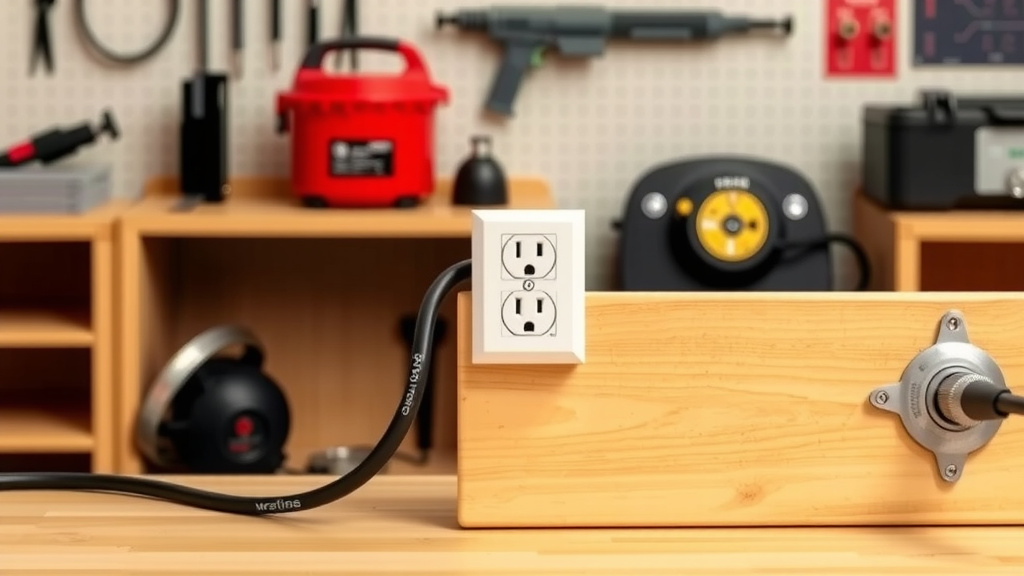
Consider installing outlets on multiple sides of your workbench. This makes it easy to plug in tools regardless of your position. A common recommendation is to place outlets along the front apron of the bench. This keeps cords out of your way while you work. You might even consider outlets on the back or sides for less frequently used items.
Consider a Power Strip Solution
For a more organized approach, you might integrate a heavy-duty power strip into your workbench design. Look for strips with surge protection. Some can be mounted directly under the workbench or along the back. This can consolidate multiple outlets into one accessible unit. Just ensure it’s rated for the amperage your tools require.
A Workbench Outlet Checklist to Get You Started
To help you finalize your plans, here’s a quick checklist. Think of this as your power outlet roadmap:
- List all your primary power tools.
- Count your battery chargers.
- Factor in your lighting needs.
- Consider dust collection systems.
- Think about charging phones or other devices.
- Identify any potential moisture sources for GFCI needs.
| Location/Type | Quantity | Notes |
|---|---|---|
| Front of Workbench (Standard Duplex) | 4 | For common handheld tools and chargers. |
| Front of Workbench (GFCI Duplex) | 2 | For added safety, especially near potential moisture. |
| Rear of Workbench (Standard Duplex) | 2 | For lighting, shop vac, or less frequently used items. |
| Integrated Power Strip | 1 | For consolidating multiple plugs, surge protected. |
This table shows just one example. Your needs might be different! We found that many people start with a configuration like this and adjust as their workshop evolves. It’s always better to have a few extra outlets than to wish you did.
Conclusion
Ultimately, determining the right number of outlets for your workbench boils down to your specific needs. We’ve found that starting with four to six grounded outlets is a solid base for most DIYers. Always consider your tools, lighting, and charging requirements. Don’t forget the importance of safety with GFCI outlets, especially in potentially damp environments. Taking a few extra moments to plan your power setup now will save you frustration and ensure your workspace is both efficient and safe for years to come. Your next step should be to create a simple sketch of your workbench and mark where you’ll need power the most.
Frequently Asked Questions
Can I just use a heavy-duty power strip instead of hardwiring outlets?
Yes, a high-quality, surge-protected power strip can be a good solution for consolidating outlets. Many people find it an easy way to get multiple plug-in points. Just ensure the strip is rated for the total amperage your tools will draw to avoid overheating or tripping breakers.
How many outlets are too many for a workbench?
It’s rare to have “too many” outlets on a workbench, especially if you use a variety of tools. The main concern is having enough accessible power without creating a tangled mess of cords. Thinking about future tool purchases can help you avoid wishing you had installed just one more outlet down the line.
Do I really need GFCI outlets in my garage workbench?
While not always strictly required by code depending on your exact location, installing GFCI outlets is a highly recommended safety measure for garage workbenches. Garages can be prone to moisture, and GFCI protection provides an extra layer of defense against electrical shock.
What’s the best placement for workbench outlets?
We found that placing outlets along the front apron of your workbench offers the best accessibility for most tools, keeping cords out of your work area. Consider adding outlets on the sides or back for stationary equipment, lighting, or charging stations to keep your main workspace clear.
Should I put outlets on their own circuit?
For larger, high-draw tools like table saws or routers, running them on their own dedicated circuit is ideal. This prevents overloading your general workbench circuit and ensures consistent power. For smaller tools and accessories, a shared circuit with multiple outlets is typically sufficient.