
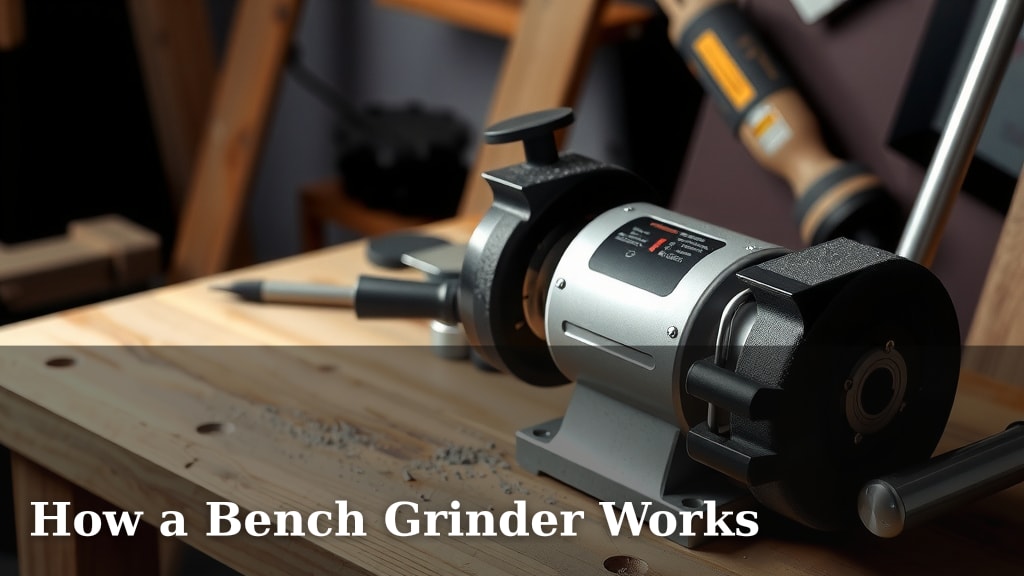
How a Bench Grinder Works
A bench grinder works by using a spinning abrasive wheel to grind, sharpen, and shape metal. It’s a powerful tool for your workshop, perfect for tasks like putting an edge back on a chisel or smoothing rough metal edges. You’ll find it incredibly useful for many common DIY projects. It’s all about controlled abrasion with a spinning wheel. The motor spins the wheel at a high speed. This speed creates the friction needed for grinding.
Think of it as a stationary, powered grinding stone. You hold your workpiece against the spinning wheel. The wheel slowly wears away material from your item. Many users find its simplicity and effectiveness quite appealing. It’s a workhorse for metal modification. You can achieve amazing results with a little practice. The steady base keeps it secure on your workbench.
- A bench grinder uses a fast-spinning abrasive wheel.
- You hold metal against the spinning wheel to shape or sharpen it.
- It’s great for tools and general metalwork.
- The motor powers the spinning action.
- It provides controlled abrasion for metal.
Let’s get into the details of how this handy tool functions. We’ll cover what makes it tick and how you can use it effectively for your projects.
Understanding How Your Bench Grinder Operates
So, you’ve got a bench grinder, or you’re thinking about getting one. Great choice! These tools are workhorses for any DIYer or metalworker. But how exactly does this spinning wheel turn raw metal into something sharp or smooth? Let’s break down the mechanics. It’s simpler than you might think. A bench grinder essentially uses controlled friction to shape and sharpen materials, mostly metal.
The Heart of the Machine: The Motor
At its core, a bench grinder is powered by an electric motor. This motor is typically mounted inside the grinder’s housing. It’s designed to spin a shaft at a very high speed. Think of it like the engine in your car, but instead of turning wheels, it turns the grinding wheels. The motor’s power is measured in horsepower (HP) or watts. More power usually means it can handle tougher jobs without slowing down. Many standard home models come with 1/4 to 1/2 HP motors, which are plenty for most common tasks.
RPMs and What They Mean
The speed at which the motor spins the shaft is measured in revolutions per minute (RPM). Bench grinders typically operate at high RPMs, often around 3,450 RPM. This speed is critical for generating enough friction. When you press a workpiece against the spinning wheel, this high speed creates heat and abrasion. This process effectively grinds away material from your workpiece. Some larger industrial grinders might have different RPMs, but for home use, this speed is standard.
The Abrasive Wheels: Your Grinding Surface
The magic really happens with the abrasive wheels themselves. These aren’t just ordinary wheels. They are made of abrasive grains, like aluminum oxide or silicon carbide, bonded together with a strong resin. The type of abrasive grain and its coarseness determine what the wheel is best suited for. Coarser wheels grind faster but leave a rougher finish. Finer wheels grind slower but create a smoother, more precise edge.
Different Wheels for Different Jobs
You’ll usually find that bench grinders come with two wheels. Often, one is a general-purpose grinding wheel, and the other is a wire brush wheel or a polishing wheel. The grinding wheel is for shaping and sharpening. The wire brush wheel is excellent for cleaning rust or paint off metal. A polishing wheel, sometimes called a buffing wheel, is used with polishing compounds to give metal a shine. Always check the wheel’s maximum RPM rating. It should be higher than your grinder’s motor speed for safety.
The Grinder’s Housing and Base
The motor and shaft are housed within a sturdy metal casing. This housing protects the internal components. It also provides mounting points for the wheels and guards. The grinder itself needs a stable base to sit on your workbench. This base often has pre-drilled holes so you can bolt the grinder down. This prevents it from vibrating excessively or moving around while you’re working. A secure mount is key for both accuracy and safety.
Safety Guards: Your First Line of Defense
Safety is a huge part of using a bench grinder. That’s why sturdy safety guards are essential. These metal shields go over the sides of the grinding wheels. Their primary job is to deflect sparks and debris away from you. They also help contain fragments if a wheel were to shatter, which is rare but possible. Always ensure your guards are in place and properly adjusted. You should only be able to access a small portion of the wheel for grinding.
Tool Rests: Supporting Your Workpiece
Another crucial safety and usability feature is the tool rest. These adjustable metal plates are positioned close to the grinding wheel. You rest your tool or workpiece on them. This provides stability and helps you maintain a consistent angle against the wheel. Proper adjustment of the tool rest is vital for effective grinding and preventing catches. Many experts recommend setting the rest just a small gap away from the wheel, about 1/8 inch or less (Occupational Safety and Health Administration standards suggest specific clearances).
How the Grinding Action Actually Works
When you turn on your bench grinder, the motor starts spinning the shaft and attached wheels. You then carefully bring your workpiece to the spinning wheel. The abrasive grains on the wheel’s surface make contact with the metal. The high speed and the hardness of the grains cause them to shave off tiny particles of metal. This is the grinding process. You move the workpiece back and forth across the wheel to grind evenly. For sharpening, you’ll typically use a consistent angle.
Spark Control and Airflow
As metal is ground away, it creates sparks. This is normal, especially when grinding steel or iron. The sparks are tiny, superheated metal particles being ejected. The direction of the sparks is important for safety. You should position yourself so the sparks fly away from your body and face. Also, the airflow around the grinder can help carry sparks and dust away, though a dust collection system is recommended for heavy use.
A Quick Look at Grinder Specs
When choosing or using a bench grinder, a few specs matter. Here’s a quick rundown:
| Specification | What it Means | Why it Matters |
|---|---|---|
| Motor Horsepower (HP) | The power of the motor. | Higher HP means more power to handle tough materials and prevent stalling. |
| Wheel Diameter | The size of the grinding wheels (e.g., 6-inch, 8-inch). | Larger wheels last longer and can handle larger projects. |
| No-Load Speed (RPM) | How fast the wheel spins without anything touching it. | Determines the grinding power and heat generated. |
| Amperage (Amps) | How much electrical current the motor draws. | Related to motor power; higher amps generally mean a more powerful motor. |
Essential Safety Checklist Before You Grind
Before you even think about grinding, run through this quick safety check:
- Are your safety glasses or face shield on and secure?
- Are the wheel guards firmly in place?
- Is the tool rest properly adjusted and secure?
- Is the grinder firmly bolted to your workbench?
- Do the grinding wheels look free of cracks or damage?
- Is your work area clear of flammable materials?
Conclusion
You’ve learned how your bench grinder turns raw metal into sharp edges and smooth surfaces. It’s all about the motor’s high-speed spin meeting the abrasive grit of the wheels. Remember, the wheels, guards, and tool rests all work together for effective shaping and sharpening. Always prioritize safety by checking your guards and rests before each use. Now that you understand the mechanics, you’re ready to tackle your next sharpening or metalworking project with confidence.
Frequently Asked Questions
Can I use a bench grinder on wood?
While a bench grinder is designed for metal, you technically can grind wood with it. However, it’s not recommended. Wood dust is highly flammable and can clog the motor. Specialized tools are much safer and more effective for woodworking tasks.
How often should I replace my bench grinder wheels?
You should replace your bench grinder wheels when they become significantly worn down, chipped, or cracked. They also need replacement if they are no longer true and wobble. Regularly inspect your wheels for any signs of damage before each use.
What is the ideal gap between the tool rest and the grinding wheel?
For safety and effective grinding, the gap between the tool rest and the grinding wheel should be very small. Aim for about 1/8 inch or less. This prevents your workpiece from getting caught and provides stable support.
Why do bench grinder wheels wear down so quickly?
Bench grinder wheels wear down because they are designed to do so by shedding abrasive particles. This process exposes new, sharp abrasive grains. Grinding harder metals or applying excessive pressure can also accelerate wear.
Is it safe to grind non-metal materials like plastic on a bench grinder?
Grinding most non-metal materials like plastic on a standard bench grinder is generally not recommended. Plastics can melt and gum up the wheel. It can also create unpleasant fumes. Stick to metal for your bench grinder unless the wheel is specifically designed for other materials.