Muscle Science: How Does Bench Press Work?
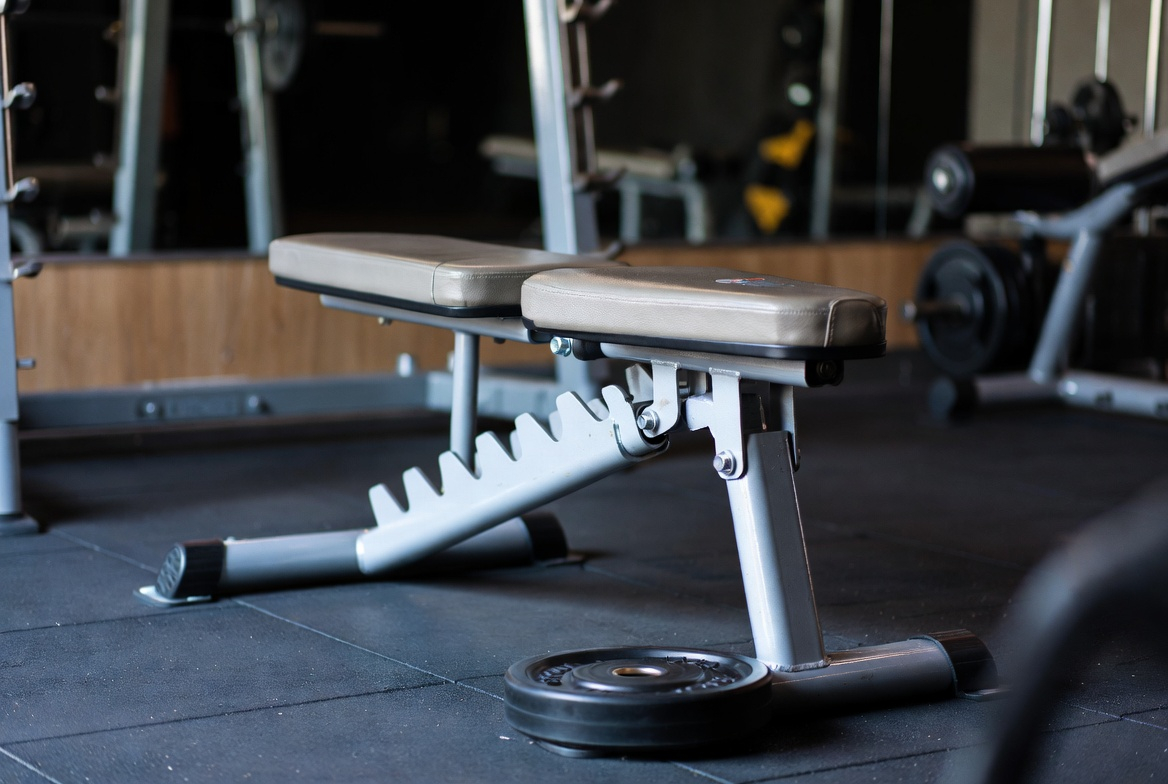
When you walk into a gym and see someone lying on a flat bench, pressing a heavy barbell away from their chest, you’re witnessing one of the most fundamental and effective exercises in strength training. But have you ever stopped to think about what’s actually happening beneath the skin during that movement? The bench press isn’t just about moving weight from point A to point B—it’s a complex orchestration of muscle fibers, joint mechanics, and neurological signals working in perfect harmony.
In this deep dive, we’re going to explore the fascinating science behind the bench press and understand exactly how your body transforms this simple-looking movement into one of the most powerful muscle-building exercises available. Whether you’re a beginner curious about why everyone at the gym obsesses over their bench press numbers or an experienced lifter looking to optimize your form and results, this article will give you the knowledge you need.
Outline: What We’ll Cover
- The basic biomechanics of the bench press movement
- Primary muscle groups involved in pressing
- Secondary stabilizer muscles
- The role of the nervous system
- How muscle fibers respond to the stimulus
- Different grip widths and their effects
- The importance of proper form and range of motion
- Progressive overload and adaptation
- Common mistakes that limit results
- Recovery and muscle protein synthesis
Understanding the Basic Movement Pattern
Let’s start with the fundamentals. The bench press is a compound pushing movement that primarily involves pressing a weight away from your body while you’re in a horizontal position. But this description barely scratches the surface of what’s actually happening.
When you lie back on a bench and grip the barbell, you’re not just holding a stick with weight on it. You’re positioning yourself to engage dozens of muscles simultaneously. The movement consists of three distinct phases: the eccentric phase (lowering the weight), the bottom position (the turnaround point), and the concentric phase (pressing the weight back up). Each phase demands different things from your muscles, and understanding these demands is crucial to understanding how the exercise works.
The Setup and Starting Position
Before you even touch the barbell, your body is already preparing for the work ahead. When you lie on a bench with your feet planted firmly on the ground and your shoulder blades retracted, you’re creating a stable foundation. This stability is absolutely critical because it allows your muscles to apply maximum force without wasting energy on stabilization.
Think of it like this: if you tried to throw a punch while standing on one leg on a wobbling surface, most of your effort would go toward maintaining balance rather than generating power. The bench press works the same way. A solid foundation means more power, better muscle engagement, and less risk of injury.
The Primary Muscle Groups: Your Powerhouse
The Pectoralis Major: Your Chest Superstar
The pectoralis major is the undisputed star of the bench press show. This large, fan-shaped muscle covers most of your chest and is responsible for the primary pushing action. When you lower the barbell toward your chest and then press it back up, the pec major is doing the lion’s share of the work.
But here’s what makes this muscle fascinating: different parts of your pec major do different amounts of work depending on where the barbell path is during the movement. The lower fibers tend to work harder with a higher grip position and a more downward pressing angle, while the upper fibers become more involved when you press more horizontally or with a lower grip position. This is why technique matters so much—you’re not just moving weight; you’re strategically recruiting muscle fibers.
The pectoralis major has two heads: the clavicular head (upper chest) and the sternal head (lower and middle chest). During a standard flat bench press, you’re engaging both, but the sternal head typically does more of the work due to the mechanics of the movement.
The Anterior Deltoid: The Shoulder’s Supporting Role
Your anterior deltoid—the front part of your shoulder muscle—is the second major player in the bench press. Don’t let the word “secondary” fool you; this muscle group plays a vital role in successful pressing, and weak anterior delts can actually limit your progress.
The anterior deltoid assists in pressing the weight away from your body, particularly in the upper portion of the movement when your arms are nearly extended. When you perform a bench press, your shoulder joint is involved in a combination of movements: flexion (raising your arm forward), horizontal abduction (bringing your arms together), and internal rotation (rotating inward). The anterior delt is heavily involved in the flexion component of this pressing pattern.
The Triceps: The Finishing Power
Now let’s talk about the triceps brachii—those three muscles on the back of your upper arm that extend your elbow. If the pec major is the engine, the triceps are the transmission that actually delivers that power to move the weight away from your chest.
The triceps become increasingly important as you approach lockout—that final position where your arms are nearly fully extended. Some strength athletes are actually more triceps-dominant in their pressing, which means the back of their arms do a larger percentage of the work. This is determined partially by genetics and partially by training history, but understanding your own pressing pattern can help you identify weaknesses and address them.
The triceps consist of three heads: the medial head, lateral head, and long head. All three are involved in elbow extension during the bench press, though the long head—which crosses the shoulder joint—becomes particularly important during the pressing movement.
The Stabilizer Muscles: The Unsung Heroes
The Rotator Cuff and Shoulder Stability
Here’s something that many people don’t think about: while your pecs, delts, and triceps are doing the obvious work, a group of smaller muscles called the rotator cuff is working behind the scenes to keep your shoulder joint safe and stable. These four muscles—the supraspinatus, infraspinatus, teres minor, and subscapularis—are relatively small, but they’re absolutely essential.
During a bench press, especially when you’re pressing heavy weight, these rotator cuff muscles are engaged in maintaining the integrity of the shoulder joint. They prevent the humeral head (the ball part of your shoulder joint) from sliding around excessively in the socket. Without adequate rotator cuff strength and stability, you’re not only limiting your pressing strength—you’re also significantly increasing your injury risk.
The Serratus Anterior: The Winged Muscle
The serratus anterior is a thin, finger-like muscle that sits on the side of your ribcage. Its primary job is to pull your shoulder blades forward and stabilize them against your ribcage. During a bench press, particularly as you press the weight away from your body, your serratus anterior is preventing your shoulder blades from pulling away from your ribcage excessively.
A strong serratus anterior allows you to maintain better scapular positioning throughout the movement, which means more stable shoulders and better force transfer from your body to the barbell.
The Back: Don’t Underestimate Posterior Chain Contribution
You might think that bench pressing is purely a chest and front-side movement, but your back muscles play a supporting role that’s often overlooked. Your latissimus dorsi and mid-back muscles help stabilize your body against the bench and provide a strong anchor for your pressing action.
Think of it like pulling yourself into a strong position: when your back muscles are properly engaged and your shoulder blades are retracted, you’re creating a better lever for pressing force. Lifters with weak backs often struggle with bench press strength because they’re not maximizing this stability advantage.
The Neurological Side of Pressing
Motor Unit Recruitment and Muscle Fiber Activation
Here’s where things get really interesting from a scientific perspective. When you decide to press that barbell, your brain doesn’t just activate your muscles in a simple on-off switch manner. Instead, it recruits motor units—combinations of a motor neuron and all the muscle fibers it controls—in a very specific way.
This process follows what’s called Henneman’s Size Principle. Your nervous system recruits muscle fibers in order from smallest to largest, based on the demands of the task. When you’re pressing light weight, you only recruit small motor units containing slow-twitch fibers. As the weight gets heavier, your brain says “we need more power,” and it recruits larger motor units containing fast-twitch fibers.
This has a practical implication: if you want to develop maximum strength and activate your largest, most powerful muscle fibers, you need to press heavy enough weight that your nervous system feels compelled to recruit those big fibers. This is why progressive overload—gradually increasing the weight you lift—is so important for strength development.
The Central Nervous System’s Role in Stabilization
Your central nervous system is also constantly making micro-adjustments to keep the barbell stable throughout the movement. As you press upward, tiny imbalances in force distribution between your left and right sides are detected and corrected. This happens at a speed and precision level that’s far beyond your conscious control.
This is why using a barbell, which requires perfect balance between both sides, is superior to using dumbbells for pure strength development in many cases. Your nervous system is being challenged to maintain stability in multiple directions simultaneously, which creates additional training stimulus.
How Muscle Fibers Actually Respond to the Bench Press
The Mechanism of Muscle Damage and Growth
When you perform a bench press, you’re creating microscopic damage to muscle fibers through the tension and mechanical stress of the movement. This might sound bad—and it’s not comfortable—but it’s actually the foundation of muscle growth.
The eccentric phase (lowering the weight) creates the most mechanical tension and is particularly effective at creating muscle damage. When you lower 225 pounds to your chest, you’re creating substantial mechanical stress throughout your pectoral muscle fibers. Your body recognizes this stress as a signal that the muscle needs to adapt and become stronger and larger.
Metabolic Stress and the Pump
There’s another factor at work during bench pressing: metabolic stress. When you perform multiple repetitions with moderate weight, you create an accumulation of metabolic byproducts like lactate and hydrogen ions inside the muscle. This creates that “pump” feeling you get—your muscles swell as blood fills them and brings nutrients and hormones necessary for recovery.
Interestingly, this metabolic stress is actually another signal for muscle growth. Studies have shown that moderate-weight, high-repetition pressing can be surprisingly effective for muscle growth, even though it doesn’t create as much mechanical tension as heavier weight does.
The Impact of Grip Width on Muscle Engagement
Narrow Grip: Emphasizing the Triceps
When you use a narrower grip—hands closer together than shoulder width—you’re changing the leverage and emphasis of the movement. A narrower grip increases the range of motion your elbows must travel, and it places more emphasis on your triceps while reducing the workload on your pectoralis major.
Some powerlifters use a very narrow grip for this reason: maximizing triceps involvement allows them to lift more weight, since their triceps are often stronger than their chest. However, for chest development, this isn’t usually the best approach.
Standard Grip: The Balanced Approach
A grip width approximately shoulder-width apart is generally considered the standard approach. This grip width creates a balanced distribution of work between your chest, anterior deltoids, and triceps, making it ideal for general strength and muscle development.
Wide Grip: Emphasizing the Chest
A wider grip—hands significantly wider than shoulder width—reduces the range of motion your elbows must travel and places greater emphasis on your pectoralis major. The disadvantage is that it’s typically harder on your shoulders and provides less triceps engagement.
A wider grip can be useful for chest-focused training, but it’s worth noting that extremely wide grips can stress the shoulder joint in ways that aren’t ideal for long-term health.
The Importance of Range of Motion and Proper Form
Why Deep Bench Press Reps Are Superior
Let’s say you have two lifters: one presses the barbell down until it touches his chest and then presses it back up. The other lifter lowers the barbell only halfway down before pressing it back up. Who’s getting the better workout?
The first lifter is. Here’s why: by pressing through a complete range of motion, you’re creating more mechanical tension throughout the movement and allowing your muscles to work through their full contractile capability. The eccentric phase—that lowering portion where you get more muscle damage—is longer and creates more stimulus.
Additionally, pressing through a complete range of motion requires greater stability and engages stabilizer muscles more thoroughly. It’s like the difference between doing a half squat and a full squat; the full movement creates more overall stimulus.
Controlled Movement and Tempo
The speed at which you perform the bench press also matters. Controlling the weight on the way down—taking roughly 2-3 seconds to lower the barbell—creates more mechanical tension and more muscle damage than dropping the weight quickly and bouncing it off your chest.
This is why ego lifting—using weight that’s so heavy you can barely control it and must use bouncing and momentum—is ultimately counterproductive. You’re not giving your muscles as much actual work to do because you’re relying on elastic energy from the bounce rather than pure muscle force.
Progressive Overload: The Key to Continuous Improvement
Your muscles are remarkably adaptive. If you perform the same bench press workout every week with the same weight, your muscles will quickly adapt to that stimulus, and progress will stall. This is where progressive overload comes in.
Progressive overload simply means gradually increasing the demands placed on your muscles. You can do this by adding more weight to the barbell, performing more repetitions with the same weight, reducing rest periods between sets, or improving the quality of your movement. Any of these approaches signals to your body that it needs to adapt by becoming stronger and more muscular.
The adaptation process is actually quite elegant from a biological standpoint. Your muscles aren’t trying to become stronger because you want them to; they’re adapting because your body recognizes that increased strength is necessary for survival and function. The progressive overload principle is simply leveraging this natural adaptive response.
Common Mistakes That Undermine Bench Press Effectiveness
Bouncing the Weight Off Your Chest
While we mentioned this briefly, it’s worth emphasizing: bouncing the barbell off your chest significantly reduces the amount of work your muscles actually do. When you bounce, elastic energy stored in your connective tissues does some of the work that your muscles should be doing. Control the weight throughout the entire movement.
Flaring Your Elbows Excessively
Some degree of elbow flare is natural and healthy, but flaring your elbows 90 degrees away from your body places excessive stress on your shoulder joints. A good rule of thumb is to keep your elbows at roughly 75 degrees from your body—not tucked directly alongside your torso, but not flared out to the side either.
Neglecting Shoulder Blade Positioning
Your shoulder blades should be retracted (pulled back) and depressed (pulled down) throughout the movement. Many lifters allow their shoulder blades to round forward, which destabilizes the shoulder joint and reduces pressing strength. Consciously pull your shoulder blades back and down at the beginning of each set.
Pressing with Your Feet Off the Ground
Your feet should be planted firmly on the ground or a bench, creating a stable base. Some lifters bounce their feet or